
Cass County Bench Warrants Explained
A bench warrant is the everyday label for a court order that brings a person before a judge, usually after a missed appearance. Iowa citation law is more exact. Under Iowa Code section 805.5, willful failure to appear is itself a simple misdemeanor, and the court issues an arrest warrant for that failure-to-appear offense. So the docket wording matters when you call. In Cass County, these warrants can follow a missed court date, a sentencing setting, a contempt or show-cause proceeding, a probation event, or a violation of a release order. Not every missed payment creates the same warrant. Ask the Cass County Clerk which event appears in the actual case file and which judge or magistrate controls the next step.
A Cass Citation Can Split
A traffic or simple-misdemeanor citation in Cass County starts with an appearance date. Miss it willfully, and section 805.5 allows a separate failure-to-appear offense plus a warrant. The Clerk records the transfer. The citation or warrant then returns to the issuing agency for enforcement, which is different from plain delinquent court debt. The official chapter 805 index lays out the Iowa citation and failure-to-appear framework.
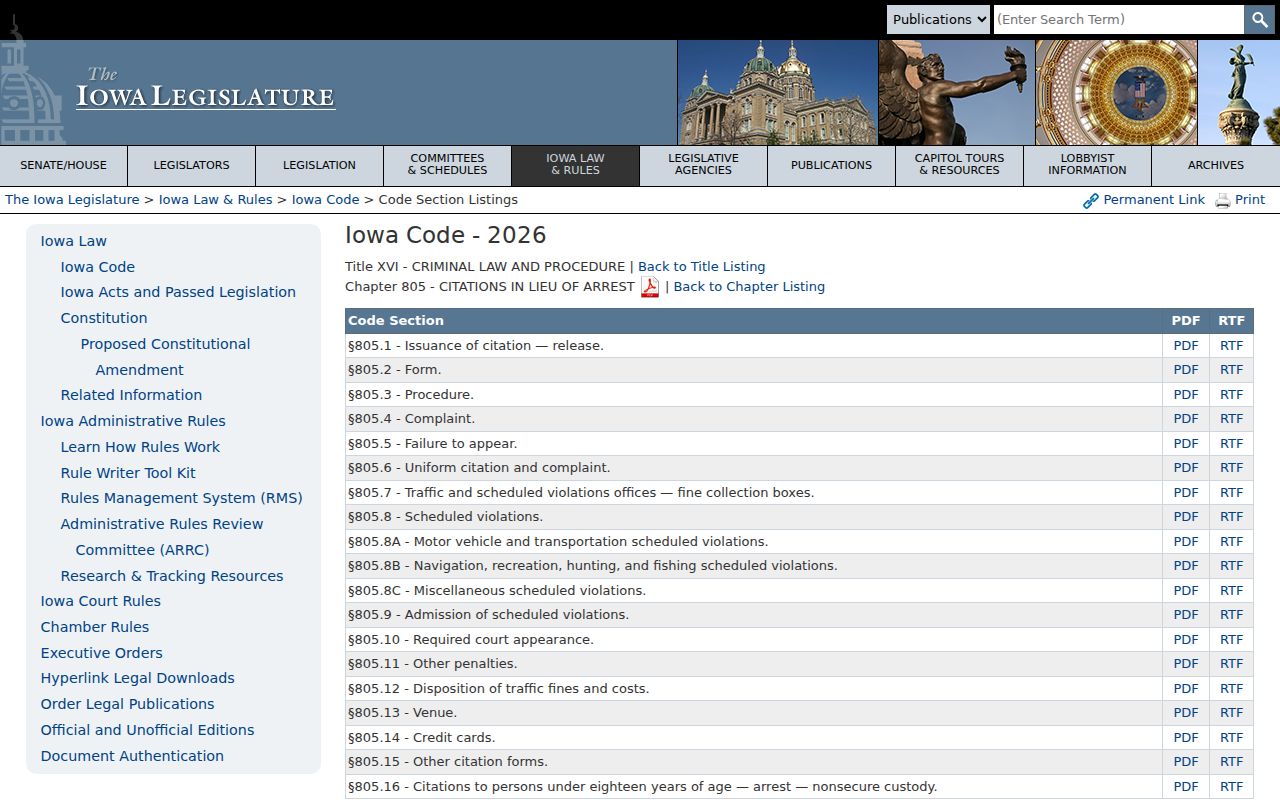
Iowa materials favor plain failure-to-appear wording over the older term "capias pro fine." That shapes how a Cass County bench warrant is described in official case records.
How Cass County Bench Warrants Are Issued
Every Cass County bench warrant starts with an underlying case or a required proceeding. The missed event or violated order gets entered in the docket. Then the judicial officer may authorize a warrant to bring the person before the court. Iowa Rule 2.36 Form 7 covers the arrest warrant issued when a defendant fails to appear for sentencing.
- The court sets an appearance, sentencing date, or other obligation.
- The person does not appear or comply as ordered.
- The judge or magistrate reviews the record and authorizes the warrant when appropriate.
- The warrant enters court and law-enforcement channels for service.
- Service, surrender, recall, or a new order moves the case forward.
Only the court can recall or quash a warrant. The Sheriff serves process, but the Sheriff cannot cancel a Cass County bench warrant on its own.
Cass County Court Roles
Cass County sits in Iowa's Fourth Judicial District. District associate judges handle simple misdemeanors, scheduled violations, county and municipal infractions, some misdemeanors and felonies, and other assigned matters. Magistrates take lower-level criminal, initial-appearance, and bail work. The Clerk routes a caller to the docket and the assigned judicial channel. The District 4 court structure names the judges and magistrates serving the district.
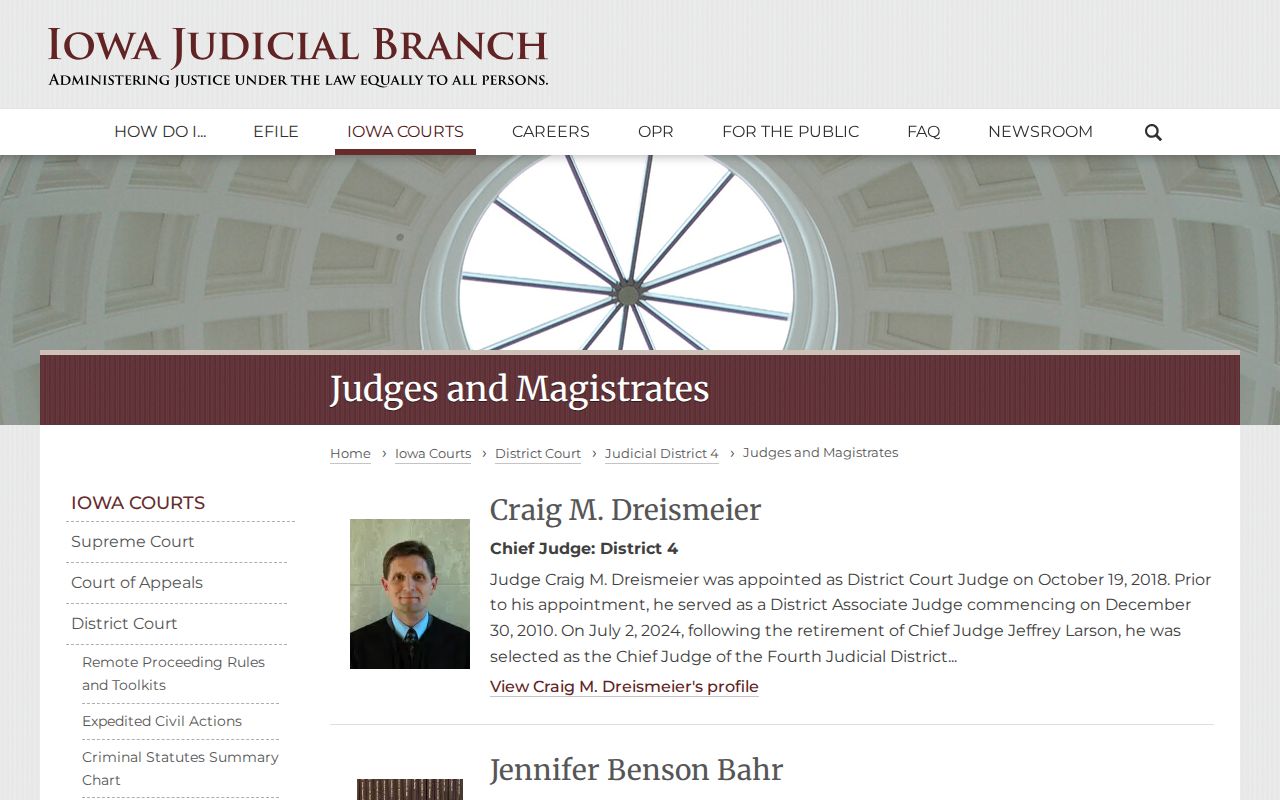
Use the directory for structure, not for guessing who signed a particular warrant. The Cass County Clerk can confirm the assigned case channel.
Bench Versus Arrest Warrants
Both warrant types can put a person in custody, but the triggers differ. A probable-cause arrest warrant under section 804.1 starts with a complaint and facts supporting an offense. A Cass County bench warrant, or failure-to-appear warrant, usually grows out of an existing case and a missed judicial obligation.
| Point | Bench or FTA warrant | Probable-cause arrest warrant |
|---|---|---|
| Trigger | Missed date, sentencing, or court order | Complaint and probable cause for an offense |
| Purpose | Bring the person before the court | Authorize arrest on the stated offense |
| Record clue | FTA, bench, sentencing, contempt, or order event | Complaint, offense, issue, bail, service, and return |
| Who clears it | The issuing court through an order | The court through service, disposition, recall, or quash |
In conversation, "bench warrant" and the statutory FTA arrest warrant overlap. Ask for the exact docket entry before deciding what a Cass County warrant requires.
Search Cass County Bench Warrants
Search Iowa Courts Online with a full name or a case or citation number, plus Cass County. Watch for a missed setting, warrant, bond, return, initial appearance, recall, quash, or new hearing. Remember, the portal is a case system, not a full active-warrant list.
Cass County Clerk of Court
5 West 7th Street, Atlantic, Iowa 50022
712-243-2105
Ask about the docket event, next setting, fine, and court-approved recall or reset process.
Cass County Sheriff and Jail
5 West 7th Street, Atlantic, Iowa 50022
Sheriff 712-243-2206 | Jail 712-243-6960
Ask about service, custody, bond routing, and call-first surrender instructions.
Cass County publishes no bench-warrant roster, coordinator line, walk-through docket, or recall form. For city parking or ordinance paperwork, contact the issuing city too.
Cass County Sentencing Warrant Fields
Iowa's sentencing failure-to-appear form shows what a warrant record holds, without exposing any private case. Fields cover state and county, criminal case number, conviction date, offense and statute, the command to peace officers, issuance date, and a judge or authorized Clerk signature. That schema is the model for a Cass County warrant entry.
| Case number | Connects the warrant to the underlying criminal file. |
|---|---|
| Conviction date | Places the missed sentencing event in context. |
| Offense and statute | Identifies the charge for which sentencing was set. |
| Command | Directs peace officers to act under court authority. |
| Date and signature | Shows when and under whose authority process issued. |
| Later docket order | May show service, recall, quash, appearance, or disposition. |
Cass County has no published bench-warrant number format of its own. Use the case number when calling the Clerk.
Cass County Search Warrant Contrast
A search warrant is different. It authorizes a search of a described place, person, or property, and it is not a Cass County bench warrant or a public self-check product. Iowa moved to electronic search-warrant procedure effective November 4, 2024, with secure law-enforcement accounts covering application, issuance, return, and transfer into the court system. The official adoption order documents that change.
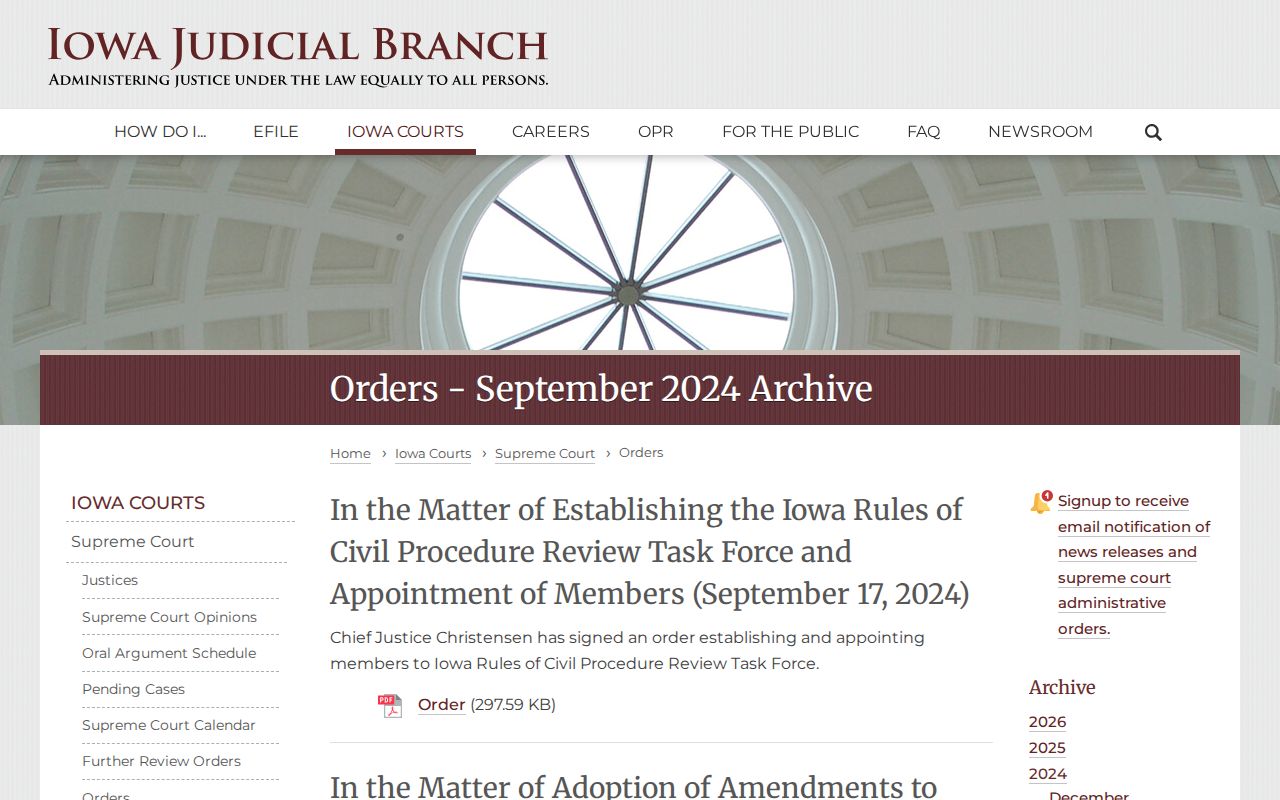
The adoption order matters here because it details another warrant process under Iowa court rules. It offers no Cass County bench warrant search and names no case.
Cass County Bench Warrant Access
An outstanding warrant may not show up online. Iowa Code section 804.29 keeps arrest-warrant application material confidential until arrest, officer return, or initial appearance, unless a court orders otherwise. Judicial Branch access guidance also restricts criminal cases with outstanding arrest or search warrants. Juvenile matters stay confidential under chapter 232, which limits what a Cass County warrant search can reveal.
Search limit: no Cass County docket match can mean no match, delayed filing, a different county, restricted warrant material, a juvenile matter, or an input error.
Iowa Code chapter 22 opens public records to lawful access, with a few exceptions. A request cannot unseal what a statute protects. Ask the Cass County Clerk which parts of a bench warrant file you may see.
Resolve a Cass County Bench Warrant
Before you drive anywhere, confirm the case number and which court issued the Cass County bench warrant. A licensed Iowa attorney can advise whether your situation calls for a motion to recall or quash, a planned appearance, surrender, bond, a payment plan, or a new court date. Recall means the judge withdraws the warrant. Quash means the court sets it aside. Neither one ends the underlying case by itself.
- Search the public case and write down the case or citation number.
- Call the Clerk for the warrant event and court-approved next step.
- Call the Sheriff or jail before appearing if custody is possible.
- Complete the appearance, filing, bond, or payment step the court requires.
- Obtain the final docket entry or order and confirm the law-enforcement update.
Call first: Cass County publishes no walk-in surrender protocol, bond schedule, warrant-recall fee, or promise of same-day release.
Paying alone may not clear a required appearance or a separate failure-to-appear warrant. Iowa courts also warn about callers demanding bitcoin, prepaid cards, Social Security numbers, or payment to a special number. In Cass County, use contacts you have verified yourself.