
Cass County Active Warrants Explained
An active warrant is simply court process that has not been served, recalled, or quashed. That label describes the warrant alone. The case behind it may still need hearings, payment, or trial, and only the issuing court can say whether its order remains in force. In Cass County, no public Sheriff list promises a full answer. Begin with Iowa Courts Online. Then call the Cass County Clerk at 712-243-2105. The Sheriff at 712-243-2206 handles service questions. The jail at 712-243-6960 routes custody and bond. For a city parking or ordinance matter, contact the issuing city directly.
No Cass County Active List
Cass County publishes no public active-warrant search, no outstanding-warrant roster, and no county most-wanted page. The Sheriff page links an inmate roster instead of a warrant database. Remember that people in custody are not the same set as people with warrants. A genuine public roster would state its fields, update date, scope, and limits. Cass County posts none of that. Do not assume every court or city feeds some hidden list either. For a personal matter, work the chain: check the public sources, then ask the Clerk or Sheriff to confirm the current record before you rely on anything.
How Cass County Tracks Active Warrants
Cass County splits the work cleanly. Courts create the warrant process, the Clerk keeps the docket, and peace officers execute and return it. Behind the scenes, county communications staff also tap the IOWA System, a law-enforcement-only network tying together more than 450 police, sheriff, state, and federal agencies around wanted-person data. There is no public login. The official IOWA System overview explains why officers can confirm a warrant that never appears on a public web page.
That closed network helps officers confirm and serve warrants. For the public, it changes nothing: use Iowa Courts Online or call the Cass County Clerk, Sheriff, jail, or issuing court directly.
Cass County Docket Versus Custody
The docket and the jail roster answer different questions. Iowa Courts Online may show a case event, court debt, citation, next setting, or disposition. The jail roster covers current custody only, and it carries an accuracy warning. Neither source offers a complete list of Cass County outstanding warrants.
| Source | Useful for | Cannot prove |
|---|---|---|
| Iowa Courts Online | Public case and financial entries | That no restricted warrant exists |
| Cass County Clerk | Docket, hearing, order, and payment questions | Law-enforcement service details outside the public file |
| Sheriff and jail | Service, custody, bond, and surrender routing | That an inmate list covers every warrant |
| IOWA System | Officer confirmation across agencies | Public self-service access |
Pick the source that owns your slice of the question. If two Cass County sources seem to conflict, ask the issuing court for the latest order and law enforcement for the service update.
Inside an Active Warrant Record
A public Cass County case file can reveal the record around a warrant. Iowa Code section 804.2 sets out the core contents of an arrest warrant: the defendant or description, the offense, the date, the county or city, and the issuing magistrate. Section 804.3 allows endorsed bail or release conditions when the offense is bailable.
| Case identifier | The Iowa court file number, not a special published Cass warrant number. |
|---|---|
| Warrant type | Arrest, failure to appear, bench, sentencing, search, or another court label. |
| Issuing authority | Magistrate, district associate judge, district judge, or authorized Clerk signature. |
| Offense | The name or general description and statute when docketed. |
| Bond or release | A case-specific amount or condition if public and applicable. |
| Service and return | The officer action that can change access and status. |
A stamp such as ACTIVE / UNSERVED is only descriptive here. Cass County publishes no official public code list. Confirm the actual docket language with the court.
Cass County Traffic Debt Warning
A missed citation can snowball. Iowa Code section 805.5 makes willful failure to appear under a covered citation a simple misdemeanor and authorizes an arrest warrant for that offense. Iowa also uses delinquent court-debt tools, including license or registration consequences, and those financial measures are not all warrants. The official traffic citation guidance covers payment timing, payment plans, and what happens after a missed date.
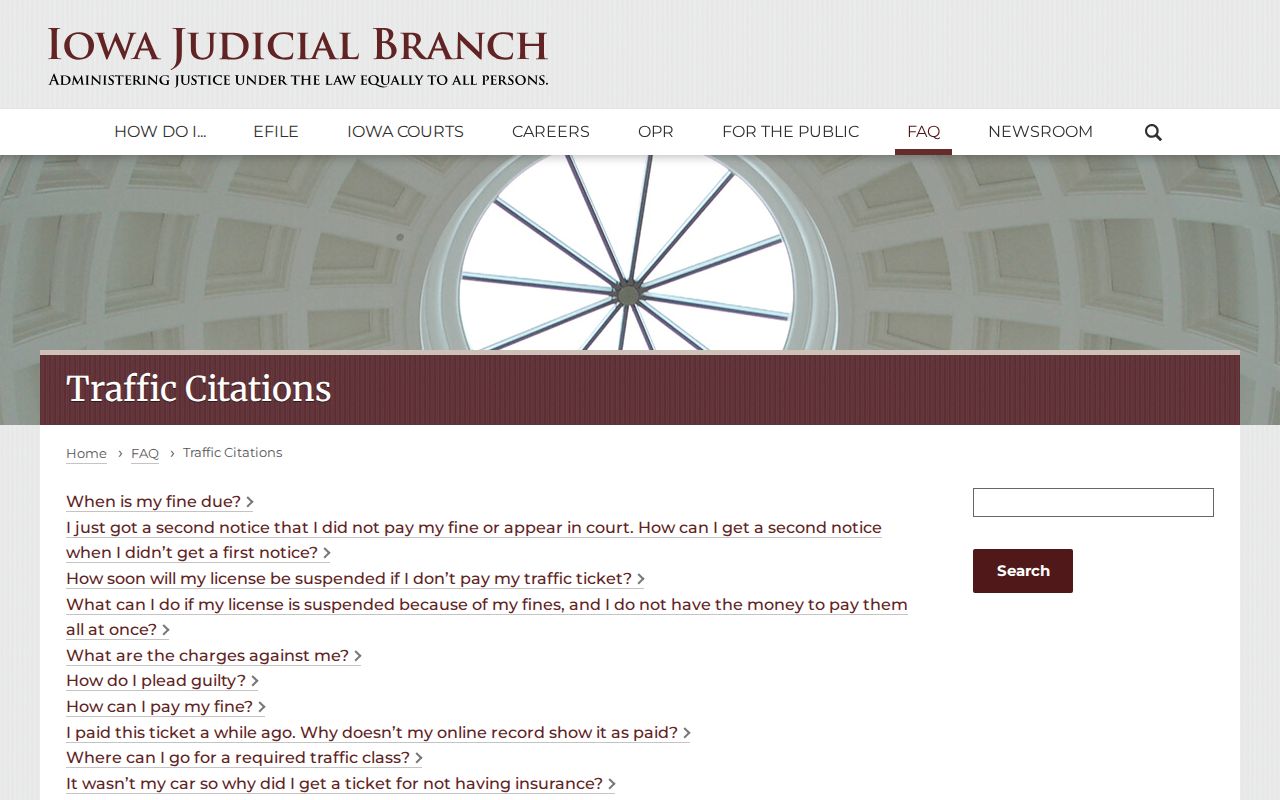
This Cass County distinction prevents a costly mistake. Paying eligible debt may not cancel a separate warrant or required appearance. Ask the Clerk whether a court order is still needed, and keep proof of the final docket action.
Warrant Roundups and Most-Wanted Lists
Cass County runs no official public most-wanted program or warrant roundup page. No warrant tip line, reward schedule, or update cadence exists. The federal Southern Iowa Fugitive Task Force is real, but its work does not create a Cass County public roster. Treat any unofficial name list online as a county record only after the Sheriff confirms it. Never approach anyone because of a claim on a website. Route routine tips to law enforcement. Call 911 for immediate danger. If Cass County ever launches a public-safety program, its own official page will describe and link it. Note: In county resolutions, the phrase "outstanding warrants" can mean financial accounting warrants, not arrest warrants.
Cass County Warrant Confidentiality
Iowa law explains why a public active list cannot be assumed complete. Under Iowa Code section 804.29, information filed to obtain an arrest warrant stays confidential until arrest and officer return or initial appearance, unless a court orders otherwise. Judicial Branch rules likewise restrict criminal cases with outstanding arrest or search warrants until service.
Access boundary: a missing public result may reflect confidentiality, delayed filing, a different county, a juvenile matter, or search input, rather than the absence of a warrant.
Juvenile matters stay closed under chapter 232 in Cass County. Chapter 22 opens public records but keeps statutory exceptions, so a written request cannot force out sealed warrant material.
When Your Name Is on the Warrant List
In Cass County, no public warrant list exists, so what counts is a confirmed court or law-enforcement record. Don't just show up. First pin down the issuing case and court. Then call the Clerk about the docket, a new setting, a payment plan, or filing. Ask an Iowa attorney whether a motion, a planned appearance, or surrender fits your situation. If custody is possible, phone the Sheriff or jail before you travel.
Act on official confirmation: only the issuing court can recall or quash a warrant. Payment, bond, or an appearance may address one part of the case without ending every obligation.
Once the court acts, get the docket entry or order that shows the recall, appearance, or payment. Ask when the law-enforcement entry will update. Keep your receipts, the case number, and any written Cass County instructions.
Cass County Scam Checks
Warrant scams feed on fear of arrest. The Iowa Judicial Branch scam warning spells out what courts never do. They don't demand bitcoin, prepaid cards, a Social Security number, or payment to a special number the caller supplies.
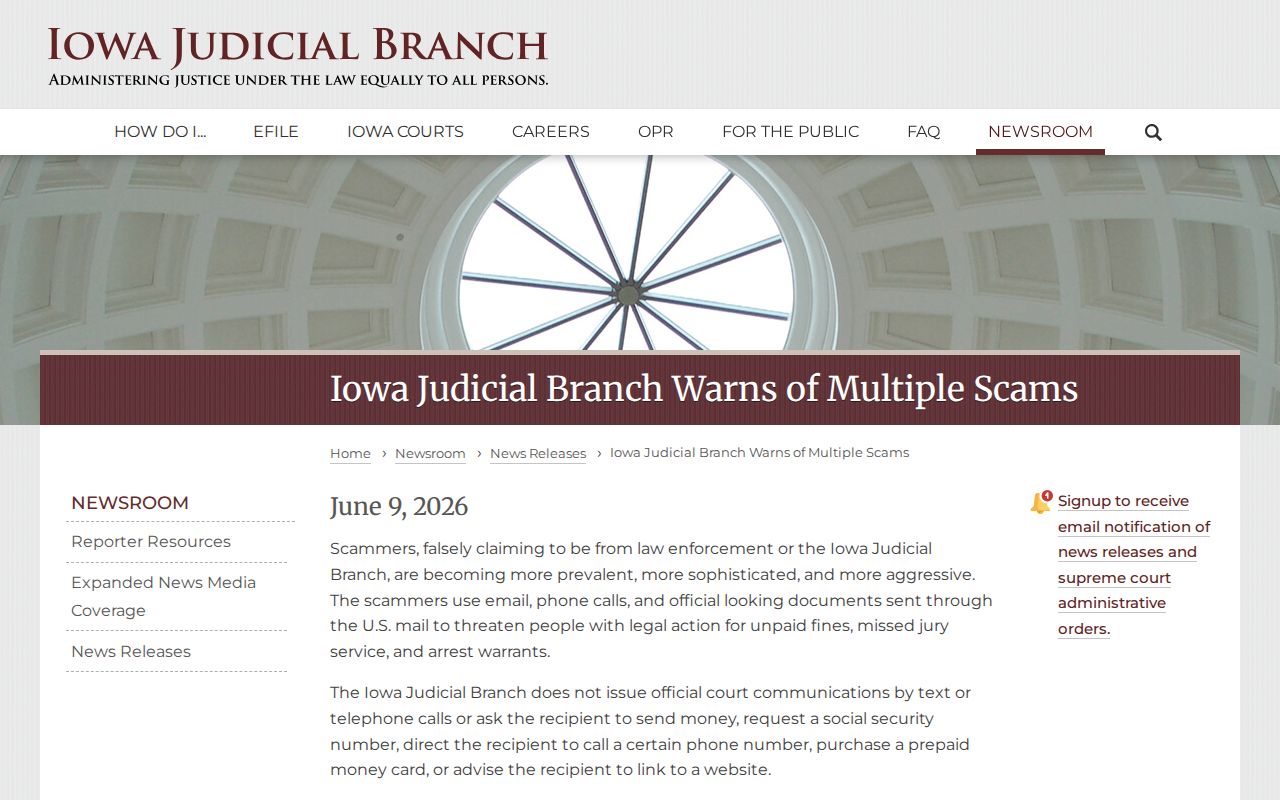
Hang up on a suspicious caller. Then dial the published Cass County Clerk or Sheriff number yourself. Law enforcement does not collect court fines; eligible fines go through the Clerk, official ePayment, mail, or the state payment line. The official Iowa arrest-procedure chapter sets the legal framework for issue, bail, service, and confidentiality.
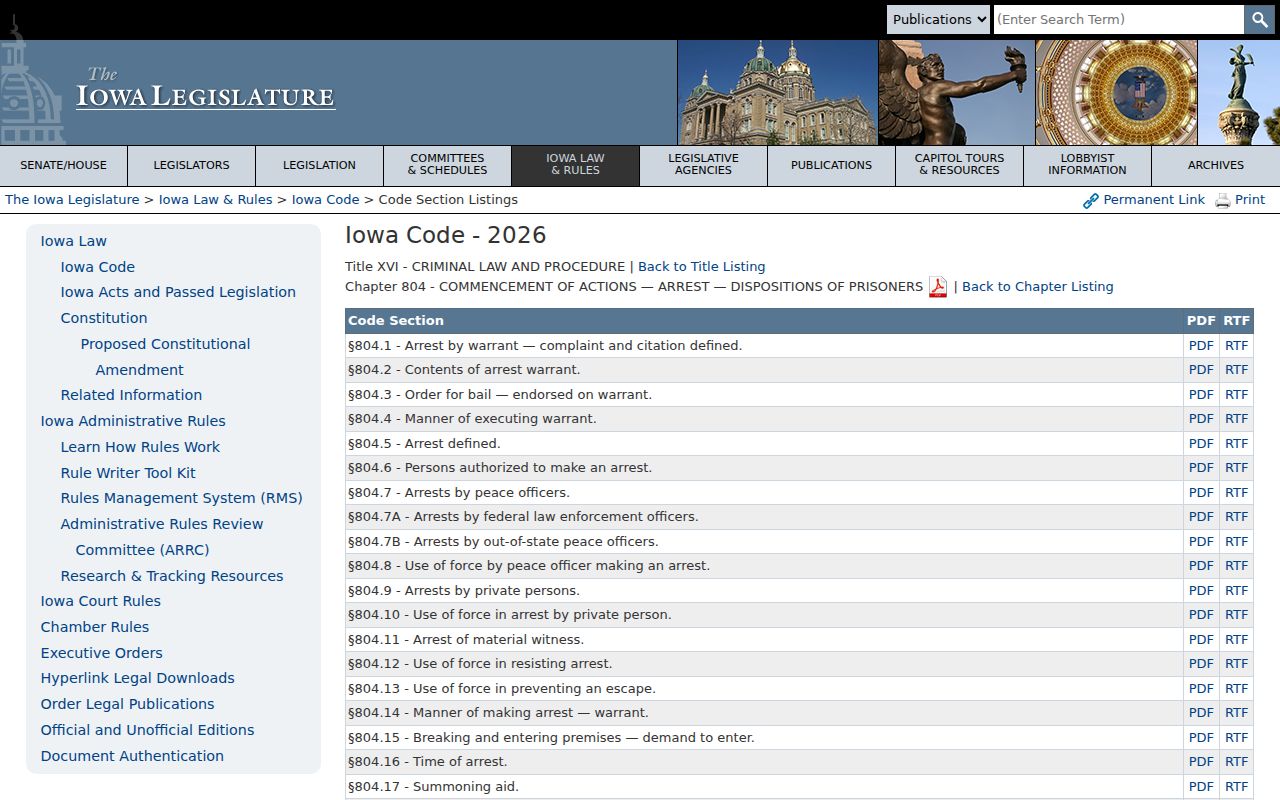
Those statutes, not a caller's threat, control Cass County warrant process.